Beating The Winter Blues With Light: What Your Eyes Need Every Day

As winter settles in, many of us feel a noticeable drop in mood, energy levels, and even sleep quality.
While this seasonal slump is common, it isn’t inevitable, and light can be the remedy. Light influences much more than our ability to see. It plays a powerful role in regulating our sleep-wake cycle, boosting our mood, and keeping our eyes comfortable and healthy throughout the darker months.
In this in-depth guide to winter eye care, we'll look at how light, both natural and artificial, affects your vision and wellbeing, and what you can do every day to feel brighter, sharper, and more balanced.
The Impact of Light on Vision and Wellbeing
Light plays a big role in how our bodies function. Our eyes are directly linked to the brain’s hypothalamus, which controls circadian rhythms, hormone regulation, and emotional responses. When sunlight enters the eyes, it helps suppress melatonin (the sleep hormone) and causes the release of serotonin, which boosts mood and alertness.
In winter, however, lower daylight can disrupt this natural balance. With sunrise arriving late and sunset creeping in early, our biological clock can become confused, leading to fatigue, low mood, and disturbed sleep. For some people, these symptoms develop severely enough to be classified as Seasonal Affective Disorder (SAD), a recognised form of seasonal depression associated with light deficiency.
But the eyes are more than just a gateway for light; they’re also susceptible to seasonal changes, particularly when it comes to dryness, glare, and strain from prolonged screen use. That’s why eye care in winter is as much about light management as it is about visual clarity.
Winter can exaggerate visual strain, particularly in low-light conditions where pupils dilate, and depth of field reduces. To avoid squinting and headaches, ensure that your prescription is up to date.
Why Natural Light Should Be Part of Your Daily Routine
One of the easiest ways to support your winter health is to prioritise daily exposure to natural light. This simply means going outside for brief amounts of time, particularly in the first half of the day, when light has the greatest impact on resetting your circadian rhythm.
Even a 15-30 minute walk in the morning or early afternoon can provide considerable benefits:
- Improves mood and reduces symptoms of SAD
- Supports sleep by regulating melatonin
- Increases visual comfort by providing distance focus breaks
- Reduces digital eye strain by resting your eyes from screens
Make it a habit to take screen breaks outdoors whenever possible. Even on cloudy days, natural daylight provides more lux (light intensity) than indoor lighting. For reference, a bright office offers around 500 lux, while outdoor daylight (on a grey day) can provide 1,000-2,000 lux.
Protecting Against the Low Winter Sun
Many people equate sunglasses with summer, but they are just as important in winter. In fact, during the winter months, the sun is lower in the sky, resulting in more direct glare, particularly while driving or walking near reflective surfaces such as wet roads, snow, or glass buildings.
Here's why wearing sunglasses is important in winter:
- Reduces glare from low-angle sunlight and reflective surfaces
- Protects against UV rays, which are present all year round
- Prevents squinting, which can cause eye strain and headaches
- Enhances visual comfort, especially during windy or snowy conditions
Look for sunglasses with 100% UVA and UVB protection, and consider polarised lenses, which reduce glare even further, perfect for driving or walking during bright winter afternoons. If you wear prescription glasses, prescription sunglasses, or photochromic lenses (which darken automatically in sunlight) provide a convenient two-in-one solution.

Artificial Light: Supplementing What Nature Can’t Provide
When natural light is in short supply, artificial light can help reset your body’s rhythm and mood. Light therapy, also known as phototherapy, involves sitting near a specially designed light box that simulates natural sunlight.
How it works:
- Light enters your eyes and activates the same brain receptors as natural sunlight does.
- It lowers melatonin and increases serotonin, making you feel more alert and balanced.
- Over time, it can help to alleviate SAD symptoms and enhance sleep quality.
Usage guidelines:
- Place it at eye level, around 30-60 cm from your face.
- Use it for 20 to 30 minutes in the morning, preferably before 10 a.m.
- For lower-intensity lamps (e.g., 2,500 lux), longer periods of up to two hours can still be beneficial.
Avoid using bright light therapy in the evening, because it can disrupt melatonin production and delay sleep onset. Instead, go for softer, warmer lighting after sunset to help your body relax.
Blue Light and Screen Habits in Winter
As the evenings grow longer and we spend more time on our screens, blue light exposure becomes a growing concern. Blue wavelengths emitted by digital devices can decrease melatonin and delay sleep, which is especially problematic during the winter when your internal schedule is already disrupted.
Why blue light matters more in winter:
- You're likely to use screens more in the evening for work, pleasure, or communication.
- Your eyes are already under strain from dry indoor air and reduced blinking.
- The darker days require more artificial lighting, which increases exposure.
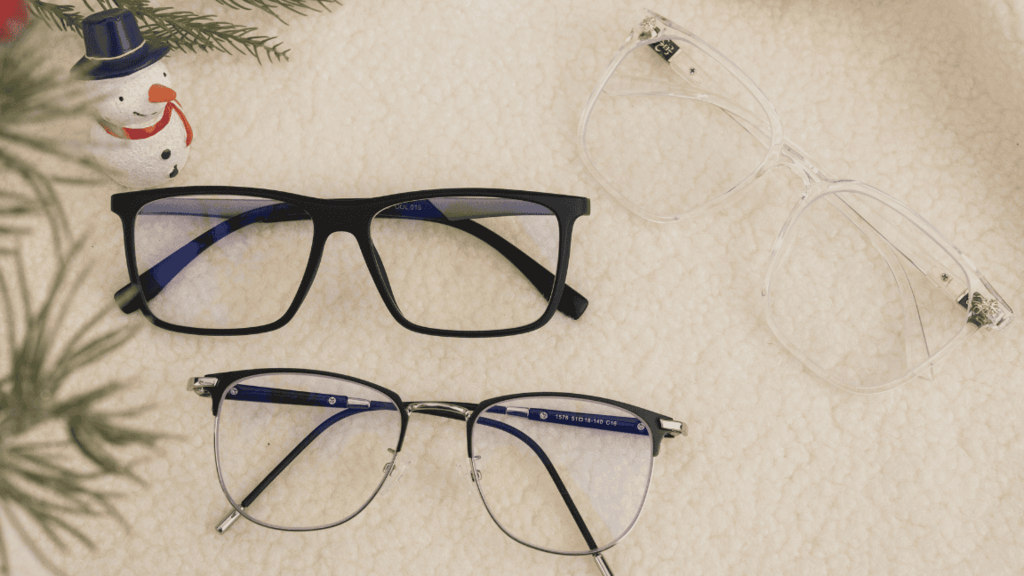
Blue light-blocking glasses are designed to reduce the impact of screens on your eyes. Worn in the evening, they can help reduce sleep disruption, minimise eye strain, and promote a more natural light/dark cycle.
Blue light glasses aren’t just for new frames; you can add a blue light coating (along with any of our other lens coatings) to your existing frames through our reglazing service. Simply send us your current frames, and we’ll fit them with brand new lenses tailored to your needs.
Everyday Winter Eye Care Tips
To complete your winter wellness strategy, here are a few practical habits worth following:
- Stay hydrated – Central heating can dry out your eyes, so drink plenty of water.
- Use artificial tears – If your eyes are dry, lubricating drops may provide fast relief.
- Adjust your environment – Humidifiers can combat dry indoor air.
- Follow the 20-20-20 rule – Every 20 minutes, look at something 20 feet away for 20 seconds.
- Book an eye test – Ensure your prescription is current and discuss any seasonal vision concerns.
Final Thoughts: Shine a Light on Winter Wellbeing
Beating the winter blues doesn’t require a complete lifestyle overhaul. Small, consistent changes can have a dramatic effect on how you feel and see during the darker months.
We offer a full range of prescription glasses, sunglasses, blue light blocking glasses, photochromic and polarised lenses to support your winter eye care routine. Whether you need everyday comfort, outdoor protection, or screen-time relief, we’ve got you covered, affordably and conveniently, from the comfort of your own home.
Check out all of our available frames to find the perfect pair for your winter eye care needs. Seek medical help for any vision changes or symptoms of depression.